

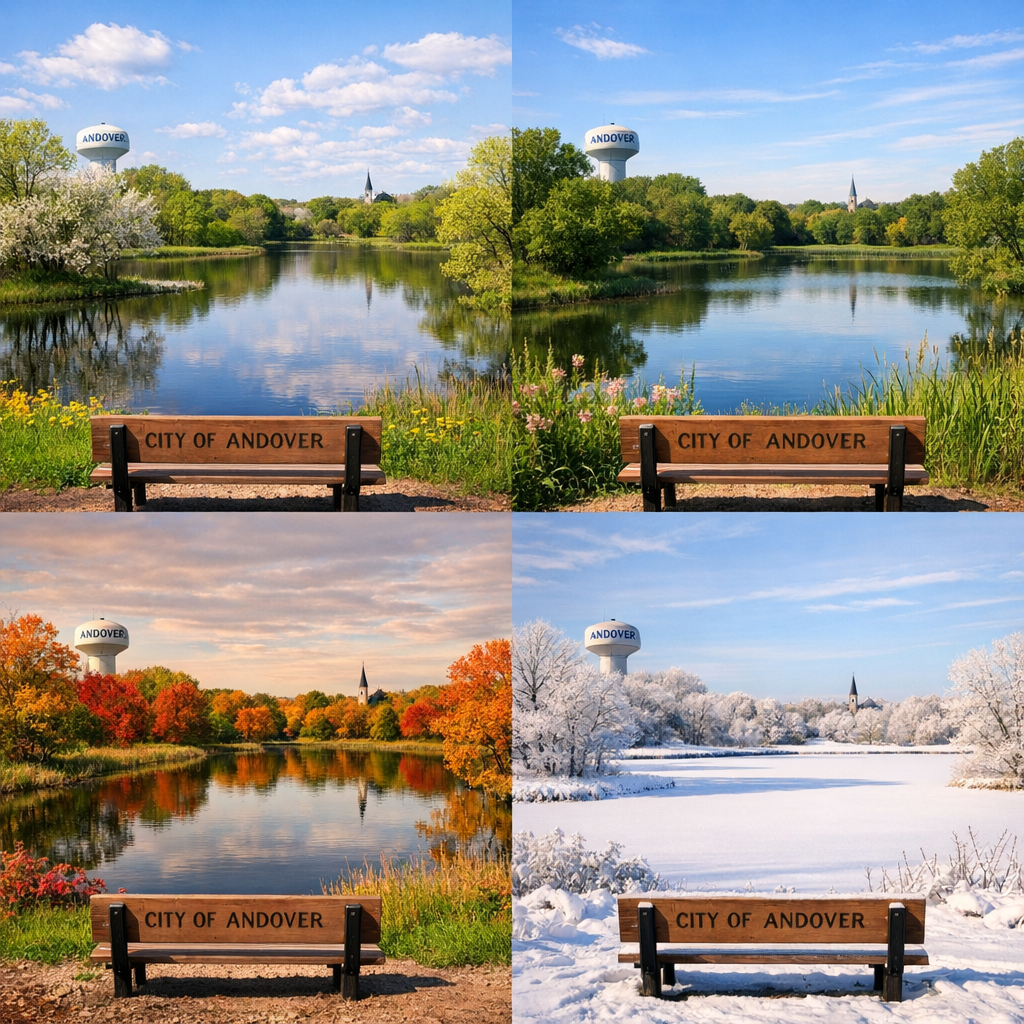
Andover, Minnesota, experiences a diverse climate characterized by distinct seasonal changes. Understanding these patterns can help residents and visitors prepare for the varying weather conditions throughout the year.
Seasonal Overview
Spring (March to May)
Spring in Andover brings a gradual warming trend. Average high temperatures increase from 41°F (5°C) in March to 68°F (20°C) in May. Precipitation also rises, with May averaging around 4.4 inches (111.76 mm) of rainfall. This season is marked by melting snow and budding flora, making it an ideal time for outdoor activities.
Summer (June to August)
Summers are warm and wet, with average high temperatures ranging from 77°F (25°C) in June to 82°F (28°C) in July. July is typically the warmest month. Rainfall is frequent, averaging about 4.3 inches (109.22 mm) in July. The combination of warmth and moisture supports lush vegetation and provides ample opportunities for outdoor recreation.
Autumn (September to November)
Autumn sees a gradual cooling, with average highs decreasing from 72°F (22°C) in September to 42°F (6°C) in November. Rainfall diminishes during this period, averaging around 1.7 inches (43.18 mm) in November. The fall foliage offers picturesque landscapes, making it a favorite season for many residents.
Winter (December to February)
Winters are cold and snowy. Average high temperatures range from 28°F (-2°C) in December to 23°F (-5°C) in January, the coldest month. Snowfall is common, contributing to the region’s winter sports activities. Residents should prepare for freezing temperatures and ensure their homes and vehicles are winter-ready.
Environmental Considerations
Andover’s climate influences local environmental initiatives. The city participates in the National Pollutant Discharge Elimination System (NPDES) Phase II Program to maintain the health of lakes, rivers, streams, and wetlands. This program addresses challenges such as increased urban development, which can lead to soil erosion and higher runoff into water bodies. Residents are encouraged to adopt practices like minimizing exposed soils, planting native vegetation, and properly disposing of waste to support these efforts.
Additionally, the Minnesota Pollution Control Agency (MPCA) has been monitoring groundwater contamination in the Eastbrook Terrace area of Andover. Contaminants like 1,4-dioxane and per- and polyfluoroalkyl substances (PFAS) have been detected in some private wells. The MPCA is providing bottled water to affected homes and continues to investigate the contamination sources to ensure safe drinking water for residents.
Understanding Andover’s climate and participating in environmental stewardship can enhance the quality of life for all community members. Staying informed about seasonal changes and local environmental issues empowers residents to make proactive decisions throughout the year.